
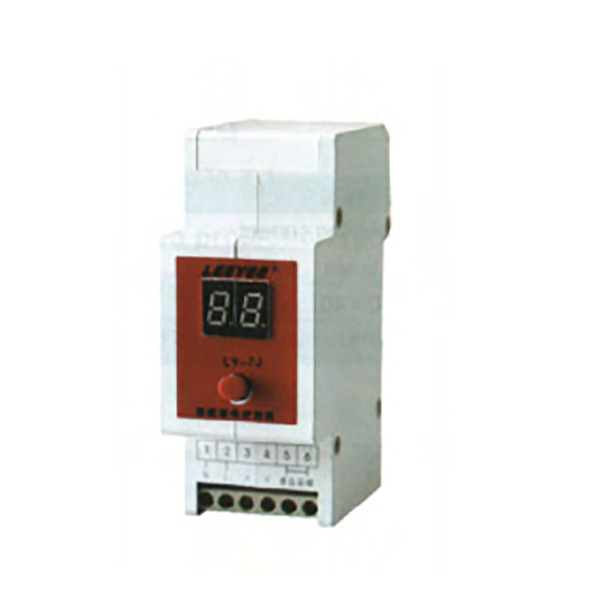
In the rapidly advancing world of electrical engineering and power distribution, protecting circuits and equipment from transient overvoltages is paramount. One of the most effective solutions for this purpose is the use of surge arresters. Surge arresters play a critical role in safeguarding electrical infrastructure from surges caused by lightning strikes, switching operations, and other transient voltage events. This article explores the various types of surge arresters, their working principles, and practical applications to help engineers, technicians, and industry professionals optimize electrical safety and performance.
### What is a Surge Arrester?
A surge arrester is a protective device designed to limit transient overvoltages in electrical systems by diverting surge current safely to the ground. When voltage levels exceed a predetermined threshold, the arrester conducts current while maintaining the system voltage within safe limits, thus preventing damage to electrical components such as transformers, circuit breakers, and other sensitive equipment.
### Common Types of Surge Arresters
Surge arresters come in various types, each suited for specific applications and system requirements. Here are some of the most widely used types:
#### 1. **Metal Oxide Varistor (MOV) Surge Arresters**
MOV surge arresters are among the most popular devices in power systems. They use metal oxide varistors to clamp voltage surges. Under normal operation, the MOV presents very high resistance and allows negligible current flow. When a surge occurs, the resistance dramatically decreases, allowing the arrester to absorb and dissipate surge energy effectively.
**Advantages:**
- Fast response to surges
- High energy absorption capability
- Maintenance-free operation
**Applications:** Used extensively in distribution and sub-transmission networks, as well as in household appliances and communication equipment.
#### 2. **Gas Discharge Tube (GDT) Surge Arresters**
GDT surge arresters utilize a gas-filled tube that ionizes under high voltage surges, causing a spark to form inside the tube which diverts the surge current to the ground. Once the surge subsides, the gas de-ionizes, and the device returns to its high-resistance state.
**Advantages:**
- Long service life
- High surge current capacity
- Low capacitance, beneficial for communication lines
**Applications:** Commonly found in telephone lines, data communication systems, and sensitive electronic equipment protection.
#### 3. **Silicon Avalanche Diode (SAD) Surge Arresters**
SAD-based arresters employ multiple silicon diodes connected in series to clamp transient voltages. They offer very fast response times and precise voltage clamping but are generally suited for lower energy surge events.
**Advantages:**
- Very fast response speed
- Precise voltage clamping
- Compact size
**Applications:** Primarily used in semiconductor devices and sensitive electronic circuits.
#### 4. **Spark Gap Arresters**
Spark gap arresters operate by creating a controlled spark for surge diversion. When the voltage exceeds a set level, a spark jumps across a gap between two electrodes, diverting the surge current safely to ground.
**Advantages:**
- Simple and robust design
- Can handle very high surge currents
- Relatively low cost
**Applications:** Often employed in high voltage transmission lines and substations.
### Key Considerations When Selecting a Surge Arrester
Choosing the right surge arrester type depends on several factors including:
- **Voltage Level:** Arresters must be rated for the system operating voltage.
- **Surge Current Capacity:** The device should withstand the maximum expected surge current.
- **Application Environment:** Whether the arrester is for indoor, outdoor, or specialized applications like solar power systems.
- **Response Time:** Faster response is essential for sensitive equipment protection.
- **Maintenance Requirements:** Some types require periodic maintenance; others are designed to be maintenance-free.
### Integrating Surge Arresters in Modern Electrical Solutions
With the increasing complexity of electrical systems, integrating surge protection devices is more critical than ever. Industrial operations, renewable energy installations, telecommunications, residential complexes, and transportation networks all benefit from effective surge protection.
The surge arrester market has grown alongside advances in materials and manufacturing processes, resulting in devices that are more reliable, compact, and environmentally friendly. Modern surge arresters are integrated into modular protection schemes for full system resilience.
### Company Expertise in Electrical Safety Components
A professional provider specialized in electrical switches and lightning protection solutions offers a comprehensive range of components to support surge arrester integration and overall system protection. Their product portfolio includes various types of switches such as rocker switches, push button switches, metal switches, slide switches, toggle switches, and tact switches. Additionally, they supply essential components like terminals, connectors, fuses and bases, circuit breakers, and both AC and DC surge protectors.
Such providers also offer surge protection boxes, solar connectors, and advanced circuit breaker solutions designed to meet the needs of modern infrastructure projects and renewable energy systems. By combining surge arresters with high-quality switches and connectors, installers can ensure superior safety, energy efficiency, and longevity of electrical systems.
### The Role of Surge Arresters in Renewable Energy Systems
With the ongoing expansion of solar power, surge protection for DC systems has become particularly important. Solar arrays are vulnerable to lightning strikes and surges traveling through power lines. Specialized DC surge arresters are designed to handle these unique conditions, protecting solar inverters, charge controllers, and batteries.
Effective surge protection enhances the durability and reliability of renewable energy installations, reducing downtime and maintenance costs. This makes surge arresters a vital component in achieving sustainable, uninterrupted power supply.
### Conclusion
Surge arresters are indispensable elements in protecting electrical systems against transient overvoltage events. Understanding the different types—MOV, GDT, SAD, and spark gap—and their applications can help in selecting the optimal device for specific needs.
As electrical systems evolve, so does the technology supporting surge protection. Partnering with specialized suppliers offering a broad range of high-quality switches, connectors, circuit breakers, and surge protectors ensures comprehensive protection and system reliability.
In conclusion, investing in the right surge arrester type and complementary components is essential for safeguarding electrical infrastructure, minimizing downtime, and maintaining safety across industrial, commercial, residential, and renewable energy sectors.